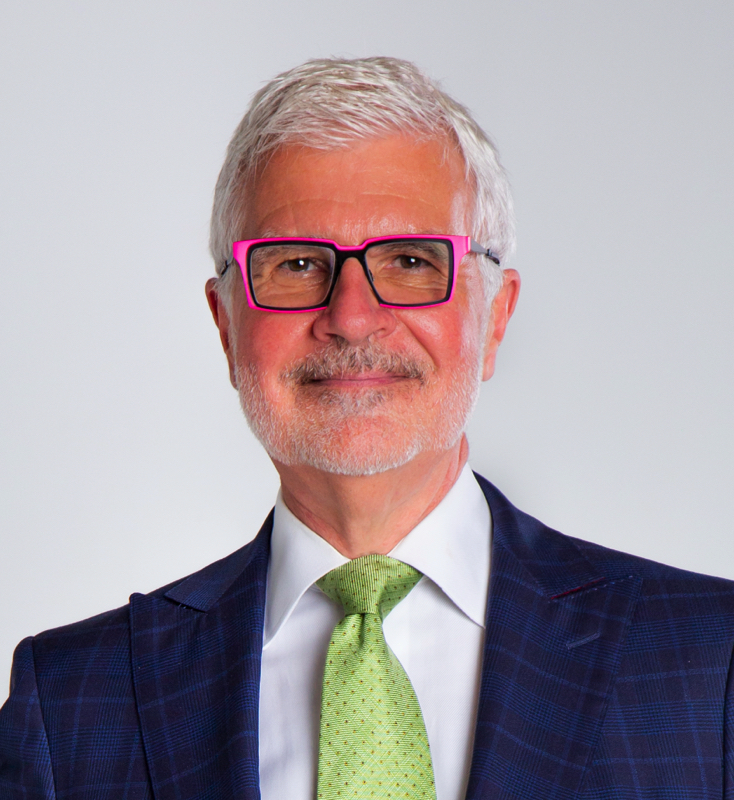
EP 418 Transcript
My name is Beth. I am from Oregon. By listening to Dr. Gundry’s podcasts, reading his books, and following his Yes Foods plans, my life has changed dramatically. I have gone from feeling fatigued every day to now being able to make plans and have energy every single day. I’m so grateful for Dr. Gundry and his Gundry MD team. Thank you.
Dr. Steven Gundry (00:32):
Welcome to the Dr. Gundry Podcast. Well, with all the wellness fads out there, it can be overwhelming to know what’s actually worth your time. And my guest today says that most of that noise doesn’t matter nearly as much as people think. And a long, healthy life comes down to far less than you’d expect. Dr. Ezekiel Emmanuel is a Harvard-trained oncologist, vice provost of the global initiatives at the University of Pennsylvania, and a former special advisor on health policy to the Obama administration. In his latest book published earlier this year, Eat Your Ice Cream, he lays out six simple evidence-based rules for living longer and better without the obsession. So in just a bit, Dr. Emmanuel, Zeke and I will get into why loneliness may be more dangerous to your health than people realize. And why, according to his own research, a real scoop of ice cream might not be so bad.
(01:29)
Oh, you’re not gonna wanna miss this one. We’ll be right back.
Speaker 3 (01:37):
Think your favorite theme park attraction is world-class? Well,
Speaker 4 (01:39):
We’re putting that claim to the test on For Your Amusement, the podcast where we exhaustively evaluate the world’s most popular theme park rides and attractions. I’m Ryan Bergara. And
Speaker 3 (01:49):
I’m Byron Marin. And on this podcast, we’ll hit everything from the legendary classics to the newest headliners in full detail. That’s
Speaker 4 (01:56):
Right. The thrills, the theming, the storytelling, the history, and whether they actually deserve the hype. One
Speaker 3 (02:02):
Attraction at a time. We’re answering the ultimate question, is it truly world class? We
Speaker 4 (02:07):
Nailed that. <laugh>
Speaker 3 (02:09):
No,
Speaker 4 (02:09):
I think that’s great.
Speaker 3 (02:11):
You love it?
Speaker 4 (02:12):
Find out on For Your Amusement.
Speaker 3 (02:14):
Follow, rate, and review For Your Amusement wherever you get your podcast.
Speaker 4 (02:18):
Bye-bye.
Dr. Steven Gundry (02:23):
You opened the book, Going After the Wellness World’s Most Extreme Corners. Now, I push back on those fads in my own world right here on this podcast as well. And I really enjoyed your writing about what made you sit down and say, “Enough is enough.”
Dr. Ezekiel Emanuel (02:40):
Yep. So I teach at the University of Pennsylvania, and I finish the semester usually in the first week of December. And when I finished, Peter Retia’s outlive landed on my desk. We still can’t figure out why, because I didn’t order it. I though my brother sent it, but he claims not. In any case, it showed up. I read it and it just made me pissed as hell and totally furious. And in the next three weeks, I wrote out 35,000 words, basically the first draft of this book. And what in particular made me mad was several things. First, his emphasis on being obsessed by outliving as it were some kind of, you know, you get the gold medal if you live longer than anyone you know, which seems insane. And in my view, you know, living a long, healthy life is a means to an end.
(03:37)
It’s not your goal. And if it’s your goal, you, something is wrong. The second thing is the overemphasis on exercise and a little bit on food and a little bit on sleeping. It’s like, all of those are important, don’t get me wrong, but they’re not the most important thing. And we know the most important thing, as you point out, is social relationships. And so that just, I had to fix that. And then there’s this sort of emphasis on getting it exactly right. And, you know, life is not mostly about getting things exactly right. You know, I, I like to say life is not, you know, the final performance you need in figure skating for an Olympic goal. Life is about, you know, we all make mistakes. We don’t do necessarily take our own advice all the time. And you have to be a little more forgiving of yourself and recognize, you know, you have to get some healthy habits, do those habits over decades, but you don’t have to, you know, never eat a hot dog.
(04:41)
I’m a Chicago boy. I love hot dogs. Are they on the wellness diet? Absolutely not. You know, the processed meats, they’ve got nitrates and nitrites. A couple of hot dogs every six months or a year ain’t gonna kill me. And, you know, it’ll give me a lot of joy. It’ll remind me of, you know, my childhood and fun events. It was all of those things which said to me, you know, we gotta become more sane when it comes to wellness. And wellness is important, but we’ve lost the sort of perspective of, uh, normal people.
Dr. Steven Gundry (05:12):
Is there a real line between a legitimate longevity practice and all this crazy expensive noise out there?
Dr. Ezekiel Emanuel (05:21):
Yeah. I think the line is, what’s the evidence? <laugh> I think it’s just that simple. So what I try to do in my book is, all right, what does the data show us? And there are some things, and I have them in the book where, you know, we don’t have enough data, but, and I think I give people a pretty reasonable way of thinking about it. If it’s not gonna hurt you and it’s not gonna cost a lot of money and it might help you, okay, you know, if you wanna do it good, you don’t wanna do it, also good. All
Dr. Steven Gundry (05:52):
Right. You grew up in Chicago. Uh, I grew up in Omaha and Milwaukee. And in Omaha, I grew up in, in a half Catholic, half Jewish neighborhood. And we didn’t know the difference as kids. <laugh> And so I, I thoroughly enjoyed your don’t be a schmuck, uh, to start with and be a mensch at the end. But can you tell people what don’t be a schmuck means to you? <laugh> And maybe your Volvo story is a good starting off point. <laugh>
Dr. Ezekiel Emanuel (06:28):
When I turned 11, we moved to the northern suburbs of Chicago, just north of Chicago. Lovely suburb, but I was not a suburban kid. I was a city kid where I could walk or ride or take public transportation wherever I wanted. I did not rely on my mother. And we moved to the suburbs and there was no public transportation nearby and you had to rely on my mother and I hated it. So when I turned 16, I wanted to liberate myself and the way to liberate myself was to get a car. And at that time, there was this free newspaper called The Reader, and it was supported by hundreds if not thousands of classified ads, all about three sentences long. And I would constantly look in there for a used car that I had enough bar mitzvah money so I could purchase it. And every time my father caught me, and it came out on a Friday, and every time my father caught me over the weekend looking, he would say, “Don’t be a schmuck.
(07:33)
You can’t afford a car. You don’t need a car. You’re not getting a car.” And I would continue to look and it would aggravate him. And then one day, I finally found a car, an old Volvo 122. And I remember because I was like obsessed by getting a Volvo or a Sab. They seemed so cool to me and reliable and all the other stuff. And I could afford it. It was like $400. So I called the guy up, my younger brother, Ari and I went down there and we checked out the car so thoroughly, you know, we rolled down every window. We, you know, looked at all the fabric, everything. And we said, you know, to the guy, “We wanna take it for a ride.” So we took it and went around the block, you know, got it up into third gear. I couldn’t get it to fourth gear because just couldn’t go that fast on Chicago streets.
(08:25)
Seemed fine. So we got a deal from the guy, bargained him down, drove the car home, <laugh> pulled into the driveway, and my dad comes out of the house, “What the hell is this?” You know? It’s like, <laugh> uh, I said, “Dad, we bought a car and plus dad, it was a deal.” Now my dad was a cheapskate beyond cheapskates, and he was having none of it. And he, you know, he says, “Yeah, you’re just a schmuck.” And he said, you know, “Pull out the car. I gotta get my car. I gotta go.” So then we found out the problem. It didn’t go in reverse. <laugh> And, you know, my father is like, you know, “Get the car out of the driveway.” So we pushed it out and, uh, you know, he said like, “You, you, you’re just a schmuck.” And so he said, “We’re calling Ralph.
(09:14)
We’re getting rid of the car.” <laugh> That was my first car purchase. I learned a lot of lessons that way.
Dr. Steven Gundry (09:20):
So, you know, you talk about your father a lot in the book and how he basically never met a person he didn’t like and never met a person he didn’t wanna talk to. And it’s a, it’s funny because my father was exactly the same way. And – I
Dr. Ezekiel Emanuel (09:36):
Think it’s a kind of generational thing, you know?
Dr. Steven Gundry (09:39):
Yeah. It was embarrassing because your – Terribly. Your, your dad would talk to the person next to him in the restaurant and whatever. And that brings me to something that I think is really important in your book, and I wanna go there next. Probably the most underrated longevity marker lever that you can turn is relationships. And – Yep. I’m gonna start with one. I, I actually tell my patients, and you have a chapter about this, never retire. What say you?
Dr. Ezekiel Emanuel (10:12):
You know, i- in America, when we talk about retirement and thinking about and planning for retirement, it’s all about money, money, money, the finances, get the finances right. And no one talks about the brain, the brain, the brain. Make sure that you’re mentally sharp <laugh> in your retirement. Otherwise, as much money as you have ain’t gonna be fun or enjoyable or fulfilling. And it turns out that there are data about the potential dangers to cognitive im – you know, your cognitive functioning from retirement. My favorite one is a RAND study from. RAND is a think tank out in Santa Monica. One of the economists looked at the re – average retirement age in different countries. And as you know, in Europe, uh, they vary a lot and show that the earlier the retirement, the more earlier cognitive impairment occurred. And you can understand why. And I’ll tell another anecdote that’s not in the book.
(11:16)
When I published a book, a guy who worked at the University of Pennsylvania with me emailed me and he said, “Well, you know, what you say about retirement rings so true to me.” And he said, “You know, I retired a couple of years ago. And the thing that happened is, uh, you know, all sorts of things just disappeared overnight. My social circle at work, the challenges of work, the guys I used to hang out with and we would go for lunch every week and, and chew the shit and, you know, we’re just my friends, it all disappeared instantaneously. And now I’m more isolated than I’ve been in decades.” And I think that’s what we forget, what work provides us. You know, it provides us a schedule. So we’re, we’re committed and, and other people are relying on us, so we wanna fulfill the job. We have challenges with our job that we have to negotiate.
(12:16)
We have challenges with our colleagues. And then we have, uh, you know, just friends who we hang out at the water cooler or some of our closest friends we make at work. And all of those things sort of disappear as my friend communicated. And it’s another, I mean, it’s the main reason not to, to retire or if you retire, make sure you plan it not just for the money, but for how are you gonna stay engaged? How are you gonna maintain friendships and things like that? And we so, so rarely do that. Yeah,
Dr. Steven Gundry (12:51):
You’re absolutely right. In fact, you know, I continue to see patients six days a week and it’s a downward spiral once, uh – Yes.
Speaker 1 (12:59):
Once
Dr. Steven Gundry (13:00):
They retire. And, and this is now happening to women. And this used to be just a, a men issue and now women leaving the w- workforce, retiring, the same thing happens to them. Uh – Yeah,
Dr. Ezekiel Emanuel (13:13):
Absolutely.
Dr. Steven Gundry (13:14):
Yeah. And, and your advice is absolutely correct. My father, uh, took early retirement because he thought his father died at 54 and he thought his number was up very shortly. And it drove him and my mother crazy. And so – <laugh>. He joined a lot of civic organizations, but get this, he became a greeter at Walmart, uh – Yeah. In his retirement. And he loved it. I mean, he was, you know, a really smart guy, an executive, and he’s a greeter at Walmart. So – I
Dr. Ezekiel Emanuel (13:46):
Forget where I went. I went, and the guy who was hosting me for, you know, some kind of speaking event, you know, said that, yeah, he worked at the, uh, hospitality desk at a hotel, advising people about what to do. I guess it was one of these resorts or vacation places, advising people about the activities that were readily available for exactly the same reason. It wasn’t because he needed the money. He wanted the interaction with people. He wanted to be helpful. And I think that’s exactly right. Now
Dr. Steven Gundry (14:17):
I also, I talk about, I actually write prescriptions for people to get a dog. I literally write out a prescription. And some of them bring it back framed as the best prescription a doctor has ever given them. And – Yeah.
Speaker 1 (14:33):
You
Dr. Steven Gundry (14:33):
Know, dogs require walking and often it is a wonderful time to interact with their dog walkers and – Right. They get, they get to sniff each other’s butts and we get to sniff, you know, people’s butts, I guess. Yeah.
Dr. Ezekiel Emanuel (14:48):
No, I, and, um, I don’t have a dog now, but I used to have a dog and exactly. It’s one of those, I like to call them, uh, wellness trifectas, because you’re getting some physical exercise, you go to the dog park or wherever you’re walking your dog, and yeah, you begin talking to people because the dogs are <laugh> interacting. If, if you’re shy or introverted or, you know, just get a dog because not only will you like the dog, but you will start talking to people inevitably.
Dr. Steven Gundry (15:21):
Your gut and brain are in constant communication. And when that connection gets disrupted, it can affect much more than digestion. It can influence how you think, how you sleep, how you handle stress, and how your body responds to everyday challenges. That’s one reason infrared sauna therapy has become part of my own routine. Sunlight and infrared saunas use targeted light and heat to support circulation, help reduce inflammatory stress, and promote a more balanced nervous system response. And when you’re thinking about long-term health, those fundamental systems really matter. Supporting circulation, inflammatory balance, detoxification, and nervous system regulation can help create the conditions your body needs to recover, adapt, and stay resilient over time. Sunlighten has more than 25 years of experience with patented technology designed for consistent long-term use right at home. Their saunas make it simple to incorporate infrared therapy into your daily routine. If supporting your health from the foundation up is a priority, take a closer look at Sunlighten.
(16:32)
Visit sunlighten.com and mention Dr. Gundry when you fill out the get pricing form. Right now, you can receive up to $1,400 off your purchase.
(16:44)
At the end of the day, there’s something special about changing into something that makes you feel completely comfortable. That’s what I appreciate about Cozy Earth’s Bamboo Stretch Knit pajamas. They’re exceptionally soft and silky smooth against your skin with just the right amount of stretch to move comfortably throughout the night. They’re lightweight and breathable, so you can stay comfortable if you tend to run warm without feeling uncomfortable when the temperature drops. And the relaxed fit is comfortable enough for sleeping, but polished enough that you won’t mind wearing them into the morning. Cozy Earth makes it easy to try them with a return and exchange window if the fit isn’t rise, so warranty against manufacturing defects. Head to cozyearth.com and use my code Gundry for up to 20% off home and sleepwear. That’s code Gundry for up to 20% off. And if you see a post-purchase survey, mention that you heard about Cozy Earth right here.
(17:43)
I think the other thing that’s fascinating to me, my research over the last 20 years has been on the microbiome, and it’s fascinating how we share our microbiome with those of us, those around us. And we know that, for instance, obese people, people who frequent around obesity catch obesity, and part of it is you catch this obesogenic microbiome. And – Yeah. So I think that’s another thing. We really should be spending time sharing microbiomes with other people, particularly the thin people.
(18:21)
<laugh> Would you consider, uh, sharing your microbiome with those around you? <laugh>
Dr. Ezekiel Emanuel (18:26):
Well, it’s very funny, you know, these fecal transplants, now we’re getting off a little bit from the book, but, you know, we, we, the medical profession, has begun using them, especially for C. Difficile, uh, uh, a terrible overgrowth of particular bacteria in the gut. And, you know, antibiotics often don’t work because it’s resistant. And the one thing that does work is fecal transplants. So we might make a joke. One of the things that I have always, um, i- i – has perplexed me is the, um, sort of rigidity with which the system allows people to be donors for fecal transplants. You can’t have traveled, you can’t have. And it’s like my daughter told me that there’s, uh, one guy in Boston who provides all the <laugh> stool for fecal transplants in Boston. And it’s like, if he takes a trip, we’re all dead. <laugh>
Dr. Steven Gundry (19:22):
You know, it’s funny, uh, you’re, like you say, you, you spent a lot of time talking about your father and, uh, his, he just couldn’t resist talking to people. And it, like I said, it embarrassed me for the num- number of years, and I guess I was fairly shy. And I was at a meeting, oh, about, I don’t know, 25 years ago, something I was chairman of program committee and I, I was out to eat that night and the only seat was at a bar and a chef’s bar. And after a few minutes, I became best friends with this couple that I had no idea who they were. By the end of the evening, they were, you know, they wanted me to come and visit and stay at their house. And as soon as we got off, I, I called my wife and I said, “Oh my gosh.” I said, “I have become my father.” This is – <laugh>.
(20:15)
This is the worst possible thing that could possibly happen to me. <laugh> Looking back, it was probably one of the best things that could happen to me. Yeah. And I, I think
Dr. Ezekiel Emanuel (20:24):
I – So I, I, I think my, my experience is exactly yours, you know, when my dad did this, right, it just made me, uh, suddenly become shy. Yeah, I wanna crawl under the table, leave the restaurant, whatever. And now, I, I’m the big evangelist. Um, so we were in New Zealand the other week and having this unbelievable meal that I was, we were celebrating our anniversary, my wife and I, and I happened on this restaurant, which just absolutely superb. Subsequently, it got two Michelin stars. And I said, you know, I gotta find the chef. I gotta go talk to the chef. And I’m the guy getting up and, you know, gotta talk to him because he’s doing a great job. And we talked about how he got trained and all the other stuff. And, uh, yes, I’ve become my father. Ah.
Dr. Steven Gundry (21:13):
So you make an incredibly powerful argument that this is something that when you look at super agers, you know, 95 and above, above 100 who are doing well – Yeah. This community engagement, this support from other people, this interest in other people, this interest in families is rampant in all of these, you know, super agers. There are
Dr. Ezekiel Emanuel (21:44):
A number of articles out there that interview these people because of, of course, they’re still, as you point out, people over 100, um, while there may be more, they’re still pretty rare, especially ones who are pretty active. And almost invariably, when you, uh, read those articles and read, you know, what keeps them healthy, you know, people will say all sorts of things. Um, and then all of them say family or friends, most important things. And there’s actually a study in China that said, you know, look at centenarians, people who lived over a hundred. And the ones who were doing the best were when their family visited them every day. So not only people coming, but a lot of social interaction. And then, you know, if they went to like a Mahjong group or some other communal activity. So those are the things that, yes, keep people quote unquote young even as they age.
(22:45)
All
Dr. Steven Gundry (22:45):
Right. Let’s move on to the title of your book, Eat Your Ice Cream. Really? Yeah. Now, first of all, everybody should know, he actually wanted to call this book Don’t Be a Schmuck.This is true, correct? That’s
Dr. Ezekiel Emanuel (23:01):
Right. And
Dr. Steven Gundry (23:02):
You were talked out of it. And I believe you that whoever talked to you out of it, eat your ice cream will certainly sell a book better than Don’t Be a Schmuck.
Dr. Ezekiel Emanuel (23:11):
Yeah. So I was resistant and very resistant, but the publisher is like, you know, Don’t Be a Schmuck is a downer. And then we had a hard time coming up with a good title. And someone who, an agent actually for me, came up with the title. And it is the winner. You know, I’ll tell you how big a winner is. You know, my brother knows a thing or two, uh, my brother Ariel knows a thing or two about, um, getting to the public and connecting with the public. And he said, the person who came up with that title, that agent, who happens to work for him, he said, “She is worth her weight in gold.” <laugh>
Dr. Steven Gundry (23:52):
So you really expect me to come out in favor of we should have a half a cup of ice cream every day of our lives as you imply in the book? Well,
Dr. Ezekiel Emanuel (24:05):
The, I will say, a number of people have come up to me and told me that they eat ice cream every day. I am not recommending that. For some people, it’s the right thing. I have a friend who 9:00 PM his quote unquote nightcap is a scoop of ice cream, not scotch or anything like that, but a scoop of ice cream. And my wife’s grandmother, she lived to 101 and lived in her own house to 100, and she had, literally had ice cream every day. She always said that ice cream, there’s always a room in the stomach for ice cream. It’ll just squiggle in around everything else. So there was a study in 2014 from Harvard Medical School. I remember
Dr. Steven Gundry (24:48):
That study. And they – I talked about it in a book. Yeah.
Dr. Ezekiel Emanuel (24:50):
They were looking at, uh, dairy products in type two diabetes, and they ran the numbers on about 150,000, maybe 190,000 people in the nurses and physician health study. And it turned out that the number one best dairy product to reduce the risk of type two diabetes was ice cream. Number two was yogurt. Now, what’s funny is when you go and read the abstract of the article, it says not a word about ice cream because they were skeptical this, how could this be true? You know, it’s got sugar in it. Uh, but that’s what the table in the article says. Yogurt fit their model, but ice cream didn’t. But that’s what the article, uh, points out. And apparently similar data have been found, uh, in other studies. But, you know, first of all, ice cream’s a d – mainly a dairy product. And we know dairy products are quite good in terms of improving the lining of the colon.
(25:52)
The saturated fats tend, is, uh, attenuated. It’s not the same as saturated fats and meats because of the membrane around it. Yep.
(26:01)
And it also, uh, you know, dairy products prevent the big spike in glucose in your bloodstream from having the sugar in the ice cream so you don’t get the high glycemic index. So all of that i- is consistent with ice cream being good. But nonetheless, look, to go back to a point we were talking about earlier, you know, the fact of the matter is life is not just about self-denial. You’re not going to become healthy by self-denial. You’ll go off the wellness activities if you have to, you know, deny yourself things just to do them. You know, it’s about pleasure too, and it’s a, life is rich. And one of the things many people like is ice cream. But let me add one other thing. I was promoting the book in one place. I was promoting it. All the interviews were done in an ice cream parlor, and they made me a special ice cream.
(26:58)
And I sat there for hours doing interviews. And one of the things I noticed is people don’t come into ice cream parlor- parlors alone. They come in with their spouse or friends, and it’s a social activity. Yeah. Eating ice cream is not just, “I’m gonna have this nice dessert.” It’s also a so- social activity. So again, you’ve got this
(27:22)
Wellness trifecta element. The last thing I would say is not all ice cream is created equal. Correct.
Speaker 4 (27:28):
And
Dr. Ezekiel Emanuel (27:30):
That’s a really important point. You wanna look for the ice cream that has the fewest ingredients, the ones that have emulsifiers and polysorbate 80 and all of those things, stay away from them. I’ve been approached by a number of those, uh, ultra processed ice creams to, you know, do something with them. I said, “No, no. Y- your stuff isn’t healthy.” Thank
Dr. Steven Gundry (27:49):
You. I have a recipe in, in one of my books for chocolate avocado ice cream. And – Oh,
Dr. Ezekiel Emanuel (27:54):
Wow. And
Dr. Steven Gundry (27:55):
So if you’re ever in the Santa Barbara area, I know you’re a cook. So, uh, come on. We’ll, we’ll whip it up and we’ll, we’ll – I’ll.
Dr. Ezekiel Emanuel (28:02):
We’ll invite
Dr. Steven Gundry (28:02):
Your brother again. I think I’m gonna be
Dr. Ezekiel Emanuel (28:04):
Out there in February, March sometime. So I will definitely, uh, hold you to that, man. All
Dr. Steven Gundry (28:09):
Right. Very good. ‘Cause that’s, that’s good ice cream. <laugh> And you’ll be surprised. But you’re right. Yeah,
Dr. Ezekiel Emanuel (28:16):
Well, I am often surprised. <laugh> No,
Dr. Steven Gundry (28:18):
Your point about dairy, I think, and you make a big point about all this. Fermented dairy needs to have its day in the sun. There is so much benefit –
Speaker 1 (28:31):
Yes.
Dr. Steven Gundry (28:31):
From fermented dairy. Now whether it’s these milk fat globular proteins, whether it’s carbon 15, this odd chain fatty acid, carbon 17, and obviously the fermentation process itself. So I fully agree with that argument in your book. Now, unfortunately, most ice cream is not fermented, but maybe you and I should put our heads together and – <laugh> All right. Let’s move on to exercise. What. People were beginning to realize that, you know, movement is, is good. Again, if you look at these super agers, one of the things they do is they move. And whether it’s, you know, whether it’s gardening, whether it’s, you know, chasing a flock of goats up a hill, whatever, these people have a constant history of movement. And I think you make a good point that this idea that we all need to be gym rats and, uh, beat ourselves up every day is, is probably misplaced when we look at what these super agers actually do in terms of movement.
(29:42)
Uh, any thoughts on that?
Dr. Ezekiel Emanuel (29:44):
100%. Um, as I point out in my book, again, going back to my father, you know, he, he would never go to a gym. You know, again, as I mentioned, he’s a cheapskate. He’s not paying a gym membership, but he was a super fast walker. And, you know, there’s a. Study just out, I think last week or the week before, I mean, really in just the last few weeks about people who are 80 years old, the fast walkers, the top 10% of walkers actually have less cognitive decline and yeah, walking and walking fast in particular is an exercise, gardening, you know, picking the weeds, mowing, collecting. All of that stuff is physical activity, even house cleaning.
Speaker 1 (30:31):
Yes.
Dr. Ezekiel Emanuel (30:32):
And that, you know, again, we often think of exercise has to be this sort of structured, organized whatever, but it’s not true. A lot of the physical activity we do in, through the day adds to increasing your heart rate, increasing your respiratory rate. And that’s the thing that is really important. And it does appear that short and tense bursts where you’re, for a brief time, getting your heart rate into the hundreds, 120, that’s really important. And that’s really gonna add to your health and longevity. Now, you know, some people, they like to go to the gym, they like the social aspect or whatever. Some people like me, you know, I like to go out and ride my bike, uh, outside and go for long rides. You know, there are all sorts of ways of getting that physical activity. It doesn’t have to be in the gym and it doesn’t have to be organized.
(31:31)
It can be just, you know, whatever you’re, you happen to be doing, uh, just doing a lot of it. Um, so.
Dr. Steven Gundry (31:38):
Yeah, my great-grandmother on my mother’s side lived in Omaha and she lived in a three-story house and –
Dr. Ezekiel Emanuel (31:46):
Oh, wow.
Dr. Steven Gundry (31:46):
Her bedroom was on the third floor. And she died two weeks before her 100th birthday, went to sleep, and was healthy as a horse until she went to sleep. And she always walked, you know, three flights of stairs up and down to her bedroom several times a day. And my, my sister and I were just kinda apoplectic. “Grandma, you know, you should move, you know, you should move your bed down. “She said,” No, you know, that’s my bedroom. “And, you know, you’re looking back, you go,” Wow, is she smart? “You know, it’s like, uh, what a good idea.
Dr. Ezekiel Emanuel (32:22):
Yeah. And, you know, up three flights twice a day is gonna get you a lot of exercise. <laugh> No, it does. I don’t care who you are. And I think that does go to the point of, you know, it, it doesn’t have to be organized. It doesn’t have to be quote unquote exercise. It just has to be moving around every day. And a lot of the blue zones, they don’t exercise. They just walk or hike or – Yeah. You know, so my wife and I, especially in the, uh, not especially, in the summer months when it’s still light after dinner, we go, we go for a evening walk, you know, covering a couple of miles and then come back home. And yeah, that’s exercise.
Dr. Steven Gundry (33:05):
Yeah, that’s one thing we spend quite a bit of time in Europe. And walking after dinner is just one of these, I think, secrets of the Mediterranean that they all do.
Dr. Ezekiel Emanuel (33:20):
Yeah.
Dr. Steven Gundry (33:21):
And, and there’s a reason for it.
Dr. Ezekiel Emanuel (33:23):
You know, the sort of in, in those Mediterranean countries where people live outside, right? Yeah, a lot of that is walking around, walking near the seashore or walking, uh, down the boulevard and, and the, uh, outdoor cafes.
Dr. Steven Gundry (33:38):
I particularly enjoyed your take on, oh, what sort of tests to get as we get older, what sort of tests not to get as we get older. And I know you, uh, were interviewed when President Biden had, uh, uh, prostate cancer diagnosis. And I completely, 100% agree with you about PSAs. And would you mind telling, uh, the story of why that is such a horrible test? And go ahead.
Dr. Ezekiel Emanuel (34:12):
So I’ve had four PSA tests. That what you have to begin with.
Dr. Steven Gundry (34:16):
Uh – And this is an oncologist, folks, a cancer doctor.
Dr. Ezekiel Emanuel (34:19):
Beginning 30 plus years ago, uh, my first one, all of them have been against my will. I don’t voluntarily do it. Now, here is the data on PSA tests. There is no doubt that PSA tests ca- catch more prostate cancer. And about, I think it’s seven to eight, uh, out of a thousand, or maybe it’s one to two. A single digit out of a thousand patients screened get diagnosed with prostate cancer. And for that reason, a lot of people say men should get a PSA. That is the wrong endpoint in my opinion. Diagnosing prostate cancer, all of us, if we live long enough, all of us men, if we live long enough, are gonna get prostate cancer. That’s just the way it’s made. And what you really wanna know is, well, if I get diagnosed with prostate cancer, am I gonna live longer? Uh, is it just gonna catch an early prostate cancer that would never harm me?
(35:23)
I would die of something else. And it turns out the latter is true. So if you look at all these big screening tests and you ask the question, not does it catch more prostate cancer, but ask the question, well, do men live longer who’ve gotten the PSA? The answer to that question is no. And the reason is that the average age of getting prostate cancer, 67, and there are competing threats to your longevity at 67. There’s heart disease, there’s other cancers, there’s stroke, there are accidents, there’s pneumonia, there’s all sorts of other ill health potentials. And so just being screened for prostate cancer does not tell you you’re gonna live longer and avoid being killed by prostate cancer. You might avoid being killed by prostate cancer, but that doesn’t guarantee you’ll be, avoid being, dying from something else. And that, and because there’s no longevity benefit from a PSA, you know, I really don’t care what’s written on my death certificate, whether it’s a heart attack or a prostate cancer.
(36:34)
So I am not inclined to get a PSA. And as I said, I’ve been tested four times, but every single one of them’s against my will. And one of the problems is, you know, you get a PSA over four, that’s typically the cutoff. You then have to get an MRI. Is there a nodule? You have to, you know, almost invariably they’ll say, “Well, we should be
Dr. Steven Gundry (36:56):
Sure.
Dr. Ezekiel Emanuel (36:57):
Take some biopsies, not the most pleasant activity you would invent.” And then if they’re not definitive, “Oh, well, we’re gonna have to test you again on the PSA.” And, and, you know, you get, you become a patient and you get round and round and all to no added benefit in terms of length of life. Well, why do
Dr. Steven Gundry (37:15):
That? Yeah, you’re right. There was a joke in medical school that was so true that all men will die with prostate cancer, but it’s incredibly unusual to die from prostate cancer.
Dr. Ezekiel Emanuel (37:27):
You got it. That’s the phrase.
Dr. Steven Gundry (37:28):
Yeah. It, it’s true. Uh, I counsel my opinion. Yeah. It’s the same way. So yeah, thanks. I, I know that’s an opinion. Uh, well, we’re out on a limb, but I think it’s a good limb to be out on. Finally, sleep. Sleep is. I know it’s big right now, and thank you for, uh, addressing that. I wanna talk about one thing that I find quite humorous. So I have an aura ring and I have –
Speaker 1 (37:54):
Yeah.
Dr. Steven Gundry (37:55):
A whoop band. And I take care of a patient who’s very high in a social media company. And he tells me that their company will not invest in these sleep trackers because they do not think the da- data is trustworthy enough to back it. And I enjoyed reading your, uh, thoughts on the same subject. Having said that, um, my, my wife wears a whoop, and every morning, the first thing we do is, “Well, you know, how did you sleep? What, what does your whoop say?” And, you know, we, we compete. And I think it’s really. I think it’s comedy to us, but what should we think about sleep? Let’s start there.
Dr. Ezekiel Emanuel (38:48):
Well, first of all, sleep is essential. You know, uh, um, I had a, when I was in high school, um, uh, I, I ran in a pretty intense group of students. Uh, we were debaters and we were constantly debating, as you might imagine.
Dr. Steven Gundry (39:04):
I was two times a debate champion and two times original oratory champion. No wonder I love you.
Dr. Ezekiel Emanuel (39:11):
<laugh> My first debate partner would always bemoan the fact that he had, you know, got eight hours of sleep and it wasted a third of the day and on and on. Um, and he was always trying to figure out how he could cut back. And, you know, the best argument for why you need sleep is the fact that we do sleep because if we didn’t need sleep, evolution would’ve gotten rid of it. And the reason is you are at your most vulnerable. You’re asleep, unconscious, predators can get you. And the fact that it has survived, uh, these thousands, tens of thousands of years tells you it’s super important biologically. And it allows the brain to consolidate short-term memories into long-term memories. It allows the bl – brain to clear out the garbage. You know, when do you collect garbage? At night, early in the morning. And so that’s really important.
(40:07)
It allows proteins that are defective to be re – to be eliminated and DNA that’s defective to be repaired. Very, very important. Humans need somewhere seven to nine. Now, there are some genetic short sleepers who can get away with four, less than 1% of the population. None of us are short sleepers. It’s also important to know that, you know, people who sleep a long time, over 10 hours, that’s not healthy either. So there is a window that the body has regulated and it’s, again, moderation, not one extreme, not the other extreme. Very, very important for human beings. And if you don’t sleep, uh, if, you know, you’re like a, a medical intern at the hospital, you know, after about 18 hours of continu- continuously being getting, being awake, you’re kinda like, uh, a bit drunk. And the more you stay up, the worse your judgment, the more risks you take.
(41:08)
All the things that happen when you consume alcohol happen when you’ve been deprived of sleep. You’re also a wor – a worse, uh, driver, uh, going home, so.
Dr. Steven Gundry (41:23):
You’re listening to this podcast, so I know you’ve got a curious mind. Here’s a helpful fact you might not know yet. Drivers who switch and save with Progressive save over $900 on average. They make it super simple. Pop over to progressive.com, answer some questions, and you’ll get a quick quote with coverage options tailored to your choices. Plus, you’ll see which discounts you may qualify for, like the online quote discount or savings for paying in full. In fact, 99% of Progressive auto customers earn at least one discount. See if you could save when you switch to Progressive. You’ll feel good about making a savvy choice. Visit progressive.com and see if you can enjoy a little extra cash back. Progressive Casualty Insurance Company and Affiliates. National average 12-month savings of $946 by new customers surveyed who saved with Progressive between June 2024 and May 2025. Potential savings will vary.
(42:28)
Yeah, we, uh, I trained at the University of Michigan in Ann Arbor and, uh – Yeah. In surgery. And one of our rotations was out at Wayne County General, which was the county hospital for Detroit. And it was a, a two road in between Ann Arbor and Wayne County General. And every year, we had a in the ditch award because, uh, that, it was 36 hours on and 12 off. And every year, one poor resident, one poor schmuck drove off the road into a ditch and crashed his car. And you could, you know, the award was given every year because somebody always got the award. And it’s because, you know, you are profoundly sleep deprived. Yeah. Yeah. It was in the ditch award. So you’re right.
Dr. Ezekiel Emanuel (43:15):
Yeah. It’s terrible. And, and, you know, what’s terrible is, is what you and I experienced, which is that the medical profession deprives its very people who it’s supposed to be training to educate its patient in wellness in sleep deprivation. Terrible. Fortunately, now it’s a little better. Yeah. But, uh, it’s a terrible, terrible process.
Dr. Steven Gundry (43:38):
So, for someone who keeps sabotaging good sleep with late night screens, I’ll catch up this weekend, what’s one change that you could do first?
Dr. Ezekiel Emanuel (43:52):
Uh, well, I think the most important change is to get the room ready and to be regular about it. So, one of the things that my wife and I have begun doing is we regularly start the bedroom routine, uh, pretty much at the same time, plus or minus about five or 10 minutes. We read in bed books, uh, actually paper books. No.
Speaker 1 (44:17):
Uh,
Dr. Ezekiel Emanuel (44:18):
So that we’re not looking at screens and we’re not, you know, sort of getting preoccupied. Mm-hmm. And, uh, you know, when my eyes begin to sort of flap and I can’t remember what the last paragraph said, I know it’s something, you know, time is up. And, uh, we’ve already turned the lights down. We have a light, a reading light.
Speaker 1 (44:39):
Yeah.
Dr. Ezekiel Emanuel (44:40):
And turn off the reading light and that’s bedtime. I will tell you, you know, different people are sensitive to different things. My wife is very sensitive to the light, so she often wears a mask. I can’t wear a mask around my head, but I’m sensitive to the heat and cold. I really need a bedroom that’s chilled. You know, you, you need to suss out how, how you sleep best. You know, for me, it’s, it, it’s a cool room. Light doesn’t bother me that, uh, much. But this kind of routine and going to bed pretty much at the same time every night, really, really important.
Dr. Steven Gundry (45:17):
Good advice. So, you know, as an author my, myself, I always stumble upon at least a few mind-blowing stats or challenges to my current understanding of achieving health and longevity in every book I write. Did this happen to you researching this book?
Dr. Ezekiel Emanuel (45:35):
Oh, 100%. So, uh, I, I will just say the, the, probably the two biggest ones happened in the first chapter. Don’t be a schmuck. So when I was writing the first chapter, which is like taking unnecessary risks, I said to myself, “What’s gotta be the schmuckiest thing people can do?” And I thought it was what’s called base jumping, which is you get in the squirrel suit, puffed up with air, you’ve got wings on, and you jump off a mountain and the wind takes you. And people do this. And it’s like, that’s gotta be the dumbest thing. So I looked up the statistics and it turns out the mortality rate is one in 2,700 jumps. The injury rate is one in 250 jumps, which is pretty serious. I was like, “That’s pretty darn schmucky.” And then I looked up, and I don’t remember exactly what prompted me to think this could be even more schmucky, climbing Mount Everest.
(46:34)
It might have been that someone died that year in, in this sort of big enough, you know, s- snowstorm or
Speaker 1 (46:41):
Something.
Dr. Ezekiel Emanuel (46:41):
Right. And it turns out the mortality rate climbing Mount Everest, which you have to pay about $150,000 for the privilege of doing, is one in 100 for all comers. And if you’re like me and you, we’re over 59, the mortality rate’s one in 25. Now, that statistic just blew my mind. You’re taking a one in 25, uh, chance of dying for what? Um, that just seemed insanely risky.
Dr. Steven Gundry (47:10):
Okay. Finally, if somebody only remembers one thing from our conversation today, what would you hope it would be?
Dr. Ezekiel Emanuel (47:17):
Do things that involve multiple wellness activities in the activity. So tomorrow night, I will be having, uh, my wife and I are gonna have a couple of couples over for a dinner party, and we’re making, uh, uh, one new recipe. We’re gonna serve really healthy food. I’m making a, a special raspberry rhubarb crustada dessert, one of my favorite desserts. We’re gonna have great conversation. One of the couples is a historian, an investor, another couple. The guy is, uh, started a healthcare company and so is a entrepreneur. Um, and, uh, uh, he also happens to be Iranian, so we’re gonna, uh, he’s gonna tell me about what his family is reporting to him. So it’s gonna be a really great dinner. We’ve got good food, so- social engagement, uh, great conversation that’s gonna keep us, um, mentally sharp. And afterwards, my wife and I are likely to go out for a walk and get some exercise.
(48:21)
So I like to call this wellness stacking. And that’s what I would think of the things where, you know, you like walking, walk with a friend so you have social interaction and the exercise effect of walking. Um, those are also present in your life and, you know, they make doing the wellness activities much more fun.
Dr. Steven Gundry (48:46):
I must ask, are you going to have a glass of red wine with dinner?
Dr. Ezekiel Emanuel (48:50):
So I, I do serve wine. I am a tea totaler. I, it doesn’t cause me any pleasure. I d – I’ve tried to drink wine. I, I taste literally half a teaspoon, uh, of wine just to – Just to be nice. I don’t. My wife likes wine and, you know, so we always have some wine with dinner because other people enjoy it and find it helpful. But you should drink wine and, and, you know, responsibly. So my advice on wine, and again, I think you’re 100%, uh, correct. Wine is one of those controversial things that I don’t think is fully settled and different people are gonna have different views. We do know that it increases the risk of about seven cancers. It’s bad for the liver, uh, um, and also, uh, pickles, uh, some brain cells. On the other hand, it also facilitates social interaction. People drink together, uh, a lot.
(49:44)
So here’s my rule.
(49:46)
You should have, you know, probably three or four, uh, glasses of whatever you’re drinking a week, not more. Uh, you shouldn’t drink alone. You shouldn’t binge drink. You don’t have those three or four at one sitting. Um, and you don’t dr- drink to drown out your sorrows. You drink in a social setting and you drink in, in moderation. And of course, don’t drive after you’ve had a glass of anything. Um, so that’s how I view it. And I, you know, I know that the people who are coming are, are go – I, I actually know them and, and they do enjoy drinking, but I think it’s not wise to be too sensorious about it because then the people will just turn you off.
Dr. Steven Gundry (50:28):
And, and the other thing we’ve learned from our European colleagues is that wine is had with a meal, not kind of as a happy hour. <laugh>
Dr. Ezekiel Emanuel (50:38):
Yeah, totally. Totally.
Dr. Steven Gundry (50:41):
All right. Before I let you go, I wanna bring in a question from a listener at Tammy Saffron tuned into my podcast interview episode 145 with Marta Zaraska, author of the book Growing Young, who claims loneliness is worse for you than smoking 15 cigarettes a day. And this young lady asks, “What about people like me? I prefer to be alone. Being around people stresses me out. I though being stressed is very unhealthy. I visit my son and grandchildren three to f- four times per year and enjoy every minute of it. I talk to a friend occasionally and I don’t need more than that. I hike alone, I shop alone, I eat alone, and I like it that way. I get out of my house every day and enjoy the outdoors. Is there really something wrong with that if I am happy? Does it still mean I will not live as long as someone with more connection with people and/or animals?
(51:40)
Well, that’s a great question. What do you
Dr. Ezekiel Emanuel (51:43):
Think? It is a great question. The first thing I would say is I would refer her and she should look up University of Chicago professor named Nick Epley. Nick Epley has done some of the great work in assessing, uh, people like her who claim to be introverts, who claim to prefer to be alone. And he’s done research, uh, including research that says, takes, uh, introverts and says to them, all right, do your regular thing on a commute, for example, on a train or a bus, and then assesses their happiness. And then the next week he says, “Your obligation as part of this research is to talk to someone for the commute and then assesses their happiness.” And it turns out invariably, both extroverts and introverts are happier, prefer talking to people. And we are very hesitant. We think of every excuse not to initiate a conversation, right?
(52:49)
The other people won’t like it. They’ll find it intrusive, right? I won’t learn anything. It’ll be a waste of time. Um, they’re gonna shut it down because they don’t wanna talk to me. All of those things are nonsense. It turns out people like talking, you actually learn something, you enjoy it more if you, a commute if you talk to someone. And these kinds of studies have been done repeated, and it doesn’t matter whether you’re introverted or extroverted. So my advice to this lady is for a week, make conversation, overcome your resistance and see if it doesn’t make you happier, because you’re gonna find out that you actually enjoy it more if you talk to other people and, you know, make a time of it. And you will, over time, change your habits. And if you don’t believe me, you can pick up Nick Epley just has a brand new book on being more social and, uh, he’ll convince you.
Dr. Steven Gundry (53:54):
Now it’s time for the question of the week. Question comes from At America the Beautiful-E3E over on YouTube on my episode about brain boosting foods. They asked, “What about chopped black walnuts?” Well, they should be fine, but interestingly enough, a number of my patients test positive for sensitivity to black walnuts, but almost no one tests positive for sensitivity to English walnuts. And most of our walnuts in United States are English walnuts. So you should be fine, but it is interesting. A number of people do react to black walnuts. Now it’s time for the review of the week, a review from @DavidSolus6691 over on YouTube on my episode about my 11 habits. They said, “Love when you make this type of video. Thanks, Dr. Gundry, for sharing with us and helping to live better, healthier lives. God bless. Well, thanks very much, David Solis. Yeah, I want you to know what I do, what I’ve learned from my patients, and as something works for me, I like to pass it on to you.
(55:01)
Glad it worked for you.
(55:11)
That’s a wrap on today’s episode. And before you go, I wanna leave you with one task. If anything you heard today made you think, made you wanna dig deeper, or gave you something you’re going to pass along to someone you care about, please take 15 seconds and leave a five-star rating and review on Apple Podcasts or Spotify. I know that sounds small, but those reviews are how Apple and Spotify decide which shows to surface to new listeners. And this show only grows when people who’ve never heard of it suddenly find it. That person finding this podcast today could hear something that genuinely improves their life or the life of someone they love, maybe even saves one. Everything I share here comes from my research when writing my next book and my clinics, where I’ve been seeing patients six days a week for over 25 years, working with nutrition and supplements as the primary treatment.
(56:14)
This is real world medicine. Help me get it to more people. And thank you. Truly thank you. I’m Dr. G, and I’m always looking out for you.