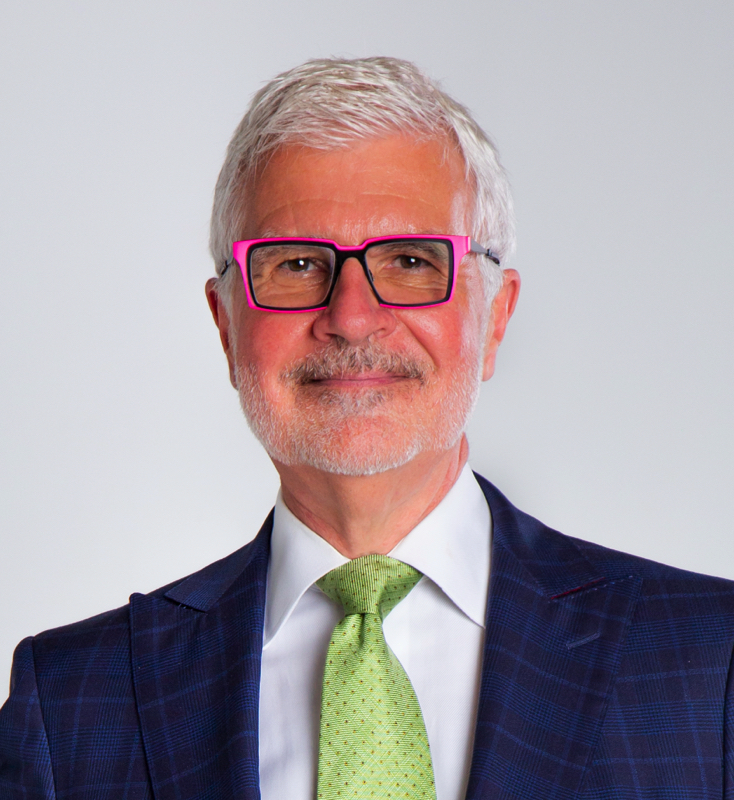
EP 401 Transcript
Dr. Steven Gundry (00:05):
Welcome to the Dr. Gundry Podcast. Well, have you ever sworn that you are going to change, you know, eat better, stop doom scrolling, stop repeating the same relationship pattern, and then you do it again anyway. A lot of that isn’t a discipline problem. It’s an automatic stress pattern your brain learned long ago. And relationships trigger it fast. When it kicks in, your nervous system takes the wheel and logic and your decision making go out the window. Now, I know this sounds like a different road for us, but it’s still health focused. When your nervous system is activated, everything gets harder, including staying on track with food and the habits you know are good for you. So today’s guest is Tyese Gibson, bestselling author of Learning Love and co-founder of The Personal Development School. You may have heard of her on Mel Robbins. In fact, she’s going to help us spot the problem and start rewiring it with a few simple, easy steps.
(01:16):
We’ll be right back. This is gonna be a fun one. What the heck is an attachment style?
Thais Gibson (01:26):
So your attachment style is basically the subconscious set of rules that you’ve been conditioned with about how to give and receive love. It’s one of the most widely studied bodies of research. It’s been around for decades and it originally came out of Cambridge University and with somebody named John Bolby and then Mary Ainsworth. And it talks about how there are four attachment styles. Every person has one. And our attachment style basically really affects the relationships that we’ll have in our adult lives because if you have a different attachment style than somebody else, it’s like sitting down to play a board game and you have a different set of rules for how the board game’s supposed to go. So if one person has the rules for Scrabble and the other person has the rules for monopoly, uh, even if you want the board game to go really well, there’s gonna be problems because you have a different subconscious set of rules.
Dr. Steven Gundry (02:14):
So there’s a subconscious rule book for love and connection?
Thais Gibson (02:20):
Yes. You can think of the subconscious mind as being the warehouse of all of your conditioning. Your conscious mind is your logical reason, reasoning, analytical mind. Your subconscious is what sours all of your conditioning. So the way that you’ve been used to getting your needs met in a relationship, what you expect a relationship to look like and how you expect it to go. For example, if somebody grew up in a household where there was fighting all the time, even though consciously we may be able to reason and say, “Fighting’s not healthy in relationships.” Subconsciously, we may be playing out patterns where we pick fights or we argue more frequently because that’s our conditioned expectation. So our attachment cell affects our needs. It affects our big triggers and fears and relationships, our expectations, the relationship we have to our boundaries, and the way that we will tend to communicate.
Dr. Steven Gundry (03:04):
And who did this to us? Are, so do I get to blame my parents for all of these, uh, attachment styles?
Thais Gibson (03:10):
Well, I think there’s a couple parts here. So one thing that’s really important to note is that our conscious mind is responsible for roughly three to 5% of all of our beliefs, our thoughts, our emotions, and our actions. And our subconscious and unconscious mind collectively are 95 to 97%. And so our conscious mind cannot outwill or overpower our subconscious mind. It’s why exactly, like you just said in your intro, you know, we can say, “We’re gonna quit eating chocolate. We’re gonna change our patterns.” And yet we’ve go through those same dynamics over and over again. And so we have to ask ourself, “Well, who is, you know, the, who are the people that are most fundamental in shaping our conditioning?” Well, it is our parents, but our parents, of course, are just passing down their attachment patterns and what they’ve learned. So it’s not about blaming anybody, it’s about understanding the types of patterns we acquired.
(03:56):
And then our body of work built on traditional attachment theory, which says, “Here are the four attachment styles and here’s the patterns each one has.” And we went into, “Well, here’s how we rewire these things.” Because you’re not born with an attachment style, it gets conditioned into you through repetition and emotion, which is what fires and wires, neural networks, networks in your brain. And so if we get, you know, a, a hand of cards that we’re not so happy with, then we can rewire and recondition our attachment style to be secure and have better relationships. We can actually engage our subconscious mind in that process.
Dr. Steven Gundry (04:28):
You know, uh, Tony Robbins is a good friend of mine, and Tony has a favorite expression. First of all, as you probably know, he came from a very abusive childhood. His mother was an alcoholic and he basically had to run the house at a very young age. And one of his teachings is stop looking at old movies, um, that you’re playing. So i- is that a good example of what we do? We, we play old movies in our head?
Thais Gibson (05:01):
Yes, absolutely. So the old movies, and this is really interesting, okay? So what happens when we go through hard things is that we hold onto them and we hold onto negative things more than positive things. It’s a biological evolutionary mechanism, okay? So for example, I always give people the analogy, let’s say you’re walking in the woods tomorrow and you see a bear and the bear chases you and you run away and thank goodness you’re safe, but you have to go back into the woods the next day. Well, what does your mind do? Well, the moment that the trees move, you’re like, the bear’s coming, we’re bracing, right? So we have stored the perceived threat of the bear and our mind
Dr. Steven Gundry (05:38):
In order to- Good idea.
Thais Gibson (05:39):
Exactly. <laugh> And our mind is wired to project that perceived threat back out. We also hang onto negative things more than positive things. For example, when the bear’s chasing you and you get home and you tell your family, “Oh my gosh, the bear chased me. Thank goodness.” You don’t tell your family, “Oh, well, the bear was chasing me. I saw the most beautiful flowers on the ground.” No, you’re like, “You remember the bear and the bear’s teeth.” So our mind has this negativity bias, and then we hold on and store these experiences and project them back out. And that’s great if it’s a bear, but you know what it’s not so great is when your wounds and childhood, which are connected to our different attachment styles are things that now we’re projecting onto our adult relationships. So for example, if somebody grew up in a household where there was a lot more inconsistency or there was real or perceived abandonment growing up, well, if you have a huge abandonment wound in your childhood, then what happens is as an adult, if somebody doesn’t text you back for 10 minutes, you’re going, “Oh my gosh, am I being abandoned?
(06:34):
Do they still like me? Are they leaving me? ” You know, people can get into a dynamic where they project back out their childhood, or if somebody constantly felt trapped or controlled in their childhood, they may always be pushing people away, trying to carve out their freedom because of that fear that they’re reprojecting back out, just like the bear in the woods. You think that the trees move, you assume it’s the bear. We jump to those conclusions. The same thing happens with each of the different attachment cells according to their own individual wounds. And then where this really comes full circle, which I think has a huge impact on our health and is a big link to the health component is that I always give people this acronym, BTEA, which is when we believe these things, so we believe we’ll be abandoned because you stored that threat from childhood or you believe you’re gonna be betrayed or trapped.
(07:17):
Those beliefs create patterns of thought. So even if we use a really obvious analogy, you believe that you’re not good enough. Well, then you start thinking thoughts like, “I’m not interesting enough. I’m not smart enough. Maybe you’re on your way to a networking event and you’re thinking I’m not interesting enough or clever enough or attractive of enough.” And you can imagine that all of these thoughts are sort of like tree branches coming off of a tree trunk. So the belief being the tree trunk, “I’m not good enough.” The thoughts are all of these, I’m not this enough or that enough. And how do we start feeling when we think those thoughts when we feel stressed? And now we have this like cortisol or norepinephrine response in our body, which now communicates to our nervous system, “Hey, time to get out of parasympathetic nervous system and into sympathetic nervous system.” So now we’re in fight or flight mode and most interestingly, all of the actions, so BTEA, beliefs, thoughts, emotions, actions, all of the actions that we take are actually based on our emotional state and neuroscience has proven this.
(08:16):
So even people who think they’re very logical, rational thinkers, they are still making, you know, emotionally based decisions at the tipping point, and then they come back and they’re quick to rationalize or justify those actions through logic. So really, if we’re not in charge, to your point of these stories, we have these stories in our mind, they come from past events that have imprinted us, we project them out. They actually govern how we think, how we feel, and how we behave, and this is all happening at a subconscious level, often without our conscious minds awareness.
Dr. Steven Gundry (08:44):
Has anyone had a normal childhood? <laugh>
Thais Gibson (08:49):
This is a good question. I think it’s really important to note, so we can get into maybe some of the four attachment cells and how you’ll see- Yeah. … these different patterns play out, but we do have the secure attachment style, which we’ll call, you know, the, the sort of gold standard of childhood, um, and securely attached people make up about 50% of the population. Oh,
Dr. Steven Gundry (09:07):
Thank goodness. Yes.
Thais Gibson (09:08):
I mean,
Dr. Steven Gundry (09:09):
Is that a good thing? Yeah,
Thais Gibson (09:09):
It is a good thing.
Dr. Steven Gundry (09:10):
Oh,
Thais Gibson (09:10):
Okay. <laugh> So securely attached individuals. Obviously, we’d like that effort to be higher in a perfect world, but securely attached individuals, they do grow up, grow up with a lot of healthy, what we call approach oriented behavior. So their parents are attuned, they’re consistent with them, they model healthy communication, they make a child feel safe to trust them, to rely on them, to express their emotions. So you securely attach kids, they grow up to be adults with very adaptive behavior. They grow up to be able to feel like they can trust people well, they have less of those triggers or their bear in the woods, less things that they’re projecting, and securely attach people in relationships, report having the longest lasting relationships, but also being the most fulfilled in those long lasting relationships, which I think is an important distinction. Now, does anybody have a perfect childhood?
(09:55):
No, of course not. <laugh>
Dr. Steven Gundry (09:56):
Hide it.
Thais Gibson (09:57):
Come
Dr. Steven Gundry (09:57):
On. My parents assured me I had a perfect childhood. There
Thais Gibson (10:01):
Is no such thing at all. So, so we have a dynamic where, you know, we don’t have anything in terms of perfection, but when we’re looking at conditioning and how we get impacted by our childhood or even past events, because in fairness, conditioning is always happening. Conditioning doesn’t just end in childhood. Whatever we’re exposed to through repetition and emotion over time will recondition us. That’s why you hear things like, “You’re the sum of the five people you spend the most time around because truly people rub off on you or I’m sure with your wife over the years and years, you probably have found yourself taking on some of her mannerisms or expressions or vice versa. We all rev off on each other over time.” And so, so, you know, nobody has a perfect childhood, but what we’re looking for in terms of what determines which attachment style we are out of the four is, is really what is the ratio of healthy to unhealthy events.
(10:47):
So if you had 80% of your childhood with a lot of attunement, a lot of trust, a lot of connection, if, if you were distressed in childhood, your parents tried to say, “Hey, what’s wrong? We’re here for you. You had support.” If you get a lot of those healthy types of modeling growing up, well, then, you know, you’re likely to have those types of conditions embedded within your subconscious mind and be playing at those same patterns where, you know, part of what we take on is, in terms of conditioning is what’s modeled to us. So if we were treated that way, we’re likely to expect that from other people and also have the capacity to give that.
Dr. Steven Gundry (11:18):
So that’s 50% of people if, if we’re lucky, right?
Thais Gibson (11:23):
Mm-hmm. Exactly.
Dr. Steven Gundry (11:23):
All right. Then what’s the next bunch?
Thais Gibson (11:26):
Yeah. So the other 50% is made up of three insecure attachment styles, and they go through a lot of different attachment trauma in childhood. Trauma, I think we think of it as this big, scary word. Tr- trauma is not always big T trauma. Trauma can be small T trauma repeatedly over time. And what’s actually really interesting is if there’s small T trauma over time that’s consistent enough, it has a similar impact to a singular big T trauma event. For example, one of our first three of the insecure attachment styles is called the anxious attachment style. These individuals grow up in a childhood where there’s a lot of either inconsistency, um, which creates a sort of perceived abandonment. Like if love is there and then love is taken away, let’s say parents are very loving, but they’re traveling all the time for work. They’re always kind of touch and go.
(12:11):
They’re, they’re, you know, there and then, you know, children are left with the babysitter or the grandparents and, and always moving around. You know, that inconsistency will create in a child this fear of love being taken away, this fear of abandonment. And we can also have more acute experiences, like somebody could grow up in a fatherless home or parents could get divorced and one parent never comes back or God forbid a parent passes away. Obviously that’s more of a real abandonment. So the repeated experiences like this condition a child to go, “Okay, I’m always fearing abandonment.” That’s their version of the bear in the woods, that they’re projecting onto everything in their adult life. And anxious attachment styles, not only do they fear abandonment, but they also have big triggers around feeling not good enough, fear of being alone, excluded, disliked, rejected, unloved. Those are their big, big triggers from an integrated attachment theory viewpoint in terms of what their conditioning will be.
(13:01):
And in relationships, they’re the ones who always want to resolve the conflict right here and now. They always want to, like, “Hey, let’s fix it. Let’s … There’s an argument. We need to talk it through immediately.” Whereas sometimes people need a little more time to process and- We’re not
Dr. Steven Gundry (13:14):
Gonna go to sleep until we fix this.
Thais Gibson (13:16):
Exactly. <laugh> Which sometimes can be a great thing, but sometimes … I used to work with a lot of couples where you’d have an anxious and a dismissive avoidant. We’ll get into the other ones in a second, and the anxious is trying to solve the conflict right now, and the avoidant, like, needs a second to process. They truly take a little bit more time to process their feelings. And we might see, you know, the story of the, the anxious attachment cell is kind of chasing the avoidant around the house. The avoidant wants to go into the other room and take a minute and closes the door. They need a minute to the, themselves and the anxious, you know, spouse or partners opening the door and <laugh> coming in the room and, “No, we have to talk right now.” And the person’s like, “No.” And they’re, they’re going to the other room and closing the door.
(13:52):
And, you know, we can see these themes. And again, this is where having a different attachment cells, like having a different subconscious set of rules for love, how we communicate, what our expectations are, how we handle conflict. Um, so the anxious attachment cell wants that sort of immediate relief, and they tend to receive love through validation and approval and feeling wanted and like a priority. Um, but different attachment cells, you’ll see receive love in different ways. And last but not least, anxious attachment cells tend to be very boundaryless in relationships. They people please a lot and they get so invested in their external relationships and what people think of them that sometimes they forget about, “Well, what are my goals? What do I need? What are my priorities?” And they, they really define their sense of self through basically what feedback or approval they’re getting from people around them.
Dr. Steven Gundry (14:36):
So is that, will that person go on Instagram and Facebook and count up number of likes and- <laugh> I mean, is that what you do?
Thais Gibson (14:44):
They would be more likely to do things like that, for sure. And they would be more likely to val- value their sense of self-worth based on, um, you know, how are people responding to me. So if they, for example, are in an argument with their partner, they’re gonna have a really hard time focusing at work that day. They’re gonna have a really hard time being present because they feel like their sense of identity is almost being stripped apart, like, “Oh my gosh, something’s wrong in my relationships.” And they’ll ruminate a lot and kind of fixate on those things. It’s part of why you hear it be called anxious preoccupied. They get very preoccupied, um, with people around them. And they also end up in situations where they struggle to meet their own needs, they struggle to put themselves first, and they’ll burn out a lot because of how much they pour into relationships.
(15:26):
And they often, unfortunately, end up in situations where they feel like they’re always chasing people, chasing after people, and it’s very dysregulating for their nervous system. It’s very, they get so afraid of abandonment and they ruminate and they become anxious and it can really terrorize a lot of their physical health over time.
Dr. Steven Gundry (15:42):
Okay. So that’s the anxious person. And then you mentioned a next one.
Thais Gibson (15:47):
Yes. So in a way at the other end of the continuum, we have a dismissive avoidant. Dismiss of avoidant attachment cells, they grow up with more childhood emotional neglect. And sometimes we hear this and we think neglect is that parents are gone all the time. They’re missing for days. We think of these really extreme situations, but it’s not always like that. It can be, of course. But a lot more times, childhood emotional neglect looks like parents are there and there’s structure and there’s order in the household. Kids are at school on time, food’s on the table at ti- on time, dinner at the same time every evening. There’s often a lot of order, but the parents are not available emotionally. They’re not attuned to the child. So if a child is stressed, parents might say, uh, children should be seen and not heard, or go into the other room, don’t be a cry baby, get it together and kind of indirectly shame the child for their emotions a little bit or dismiss, diminish the child’s emotions as a whole.
(16:38):
And because children biologically are wired for attunement and they need to feel safe and they need to feel seen and they need to feel special, if those things are not met, this individual will go, “Oh, you know, they can’t really sit there and say, my parents are emotionally unavailable to me, because in our childhood stages of behavioral development, children personalize everything.” So instead, this individual goes, “Oh, I guess this emotional part of me is wrong. I guess this part of me that feels vulnerable or wants to connect emotionally is wrong.” In fact, when I express this part of myself, I kind of feel shamed. I kind of feel criticized for my emotions. So I want to make sure nobody sees this part of me. And they repress this vulnerable part of themselves and this means that they have these big wounds in childhood where they internalize a lot of shame.
(17:22):
They take criticism very deeply. They take, take criticism not as, “Oh, you made a mistake.” They take criticism to heart, like you are a mistake, right? If somebody gives them feedback, it’s like, “I am the problem. I am deeply defective is a huge core wound that they have. ” And they also are core belief about themselves and they also have these huge fears of being weak if they’re vulnerable, they fear being trapped in a situation where they can’t get their needs met because that was a big part of their childhood and they fear being helpless or really un- not good enough and they feel like they, they don’t belong. And so as adults, these individuals usually become people who they do great in early stages of relationship. They’re good at kind of, you know, hanging out, spending time with somebody, but once things get serious, they either deeply shut down because their coping mechanism while the anxious person is always trying to maintain proximity, the avoidant is always trying to create distance.
(18:14):
They’re like, “I need to know that I have my own space and my own freedom. I need to not need anybody because when I needed people in childhood, I didn’t feel like that came through.” And so as adults, they push people away, they’re much slower to warm up, they minimize their needs from other people a lot. They always take a lot longer to process. They’re the ones that in a conflict are like, “I need to go into the other room. I need space. I need distance.” And they really struggle with vulnerability, which of course is a necessary part of a healthy relationship. And last but not least, they’re individuals who often sabotage commitment or closeness.
Dr. Steven Gundry (18:47):
You know, Winston Churchill felt his mother was completely emotionally distant, that she had no interest in him. Uh, it was all about her. And he expressed this in many of his books, um, that he was, you know, he was emotionally abandoned by his mother. She was not interested in being a mother. And look what happened. <laugh>
Thais Gibson (19:13):
This is true. We, lots of things happen after that, for sure.
Dr. Steven Gundry (19:16):
If he had only had your course back then.
Thais Gibson (19:19):
<laugh> There you go. This one is the person who grows up with a lot more chaos or trauma. So this one is called the fearful avoidant attachment style and fearful avoidant attachment style individuals, they grow up with big tea trauma much more constantly. So, um, a great example is somebody who has a mother who’s an alcoholic. Actually didn’t know that about Taunja Robbins, and I’m like, okay, now I know what his attachment solve probably was. Um, but, um, but they have big tea trauma. And so you’ll usually see things like, um, a great example. I always give the example that a parent is an alcoholic, but it can also be a parent is in some form of active addiction, a parent has narcissistic personality disorder or extreme mental health issues, um, parents are abusive in some sort of way. These types of dynamics will often create a fearful avoidant.
(20:03):
And what you see is let’s use the example that mom is an alcoholic. What you see is that children get wired with opposing views about the same thing. So for example, if you have a lot of positive experiences with love, maybe one day mom comes home, she’s had a few drinks, but she’s in a good mood, and she’s nice, and she’s a little warm. She’s had a few drinks. She’s nice. She’s kind of comforting. And so we get wired to go, “Oh, love is a good thing. I want love. I want connection.” And then other days, mom comes home and she said many, many drinks, and now she’s cruel, and she’s mean, and maybe she’s a little bit abusive. And now we’re like, “Love is a scary thing. Love is cruel. Love will hurt me. ” And so children get wired to feel like love is both a very good thing and very scary thing, and these competing associations cause them.
(20:47):
Well, the anxious person’s always like, “Let’s get closer.” The dismissal avoidance, like, let’s get further. The fearful avoidant, their attachment strategy is to become hypervigilant. They’re like, “Let me predict all of your behavior so I can see how I should respond.” I remember having a client say to me once years ago, she said, “I would be upstairs in my room after school. And by how my mom came home and closed the door, I could tell whether I should run and close my door too, or if it was okay to leave it open.” And so there’s this hyper vigilance that develops. And it’s probably part of what made Tony Robbins very good with people because fearful avoidant attachment cells, they often notice every little micro expression, change in body language, tone of voice. Any shift in patterns, they’re noticing it because they’ve had to. They’ve had to decide which version of mom am I getting today or which version of my family am I getting today.
(21:37):
And they’re always kind of walking on eggshells. Um, but on the flip side, they end up being individuals who are usually very deep. They’re not very surface people. They had to go through hard things very young. They usually grew up fast. Um, but they have both the wounds originally before doing the work, because we can rewire and change these things. They have the wounds of both the anxious and the avoidance side. So they fear abandonment and losing somebody, but they also fear being trapped if somebody’s too close and their biggest overarching wound is usually betrayal. It’s like, “I can’t trust. I can’t trust my environment. I can’t trust people. I don’t know how they’re gonna behave.” And so as adults, fearful avoidance in their relationships, and this is all relationships. This can take place in our workplace relationships. It’s ultimately the relationship we have to ourselves, but, um, they’re very hot and cold.
(22:20):
They’re very ambivalent. They’re like, “Come get close, come and get close.” You get close, they’re like, “Get back. You’re too close now.” And they sort of pinball back and forth, um, and they will usually be individuals who go between these extremes in their life and they’re a little more extreme of people until they really start rewiring and doing the work to heal.
Dr. Steven Gundry (22:36):
Is there any hope after all of these patterns that have been ingrained in us from kind of day one?
Thais Gibson (22:45):
So yes, there is hope. And that’s the entire point. So this is sort of the body of work that I really built is not just understanding your attachment cell, but understanding that you can change. Okay? So we have neuroplasticity. It’s a real thing. We are, first of all, not born with an attachment style. It gets wired into us through repetition and emotion over time. And, and we can change these things that are not working for us. So we go through five pillars of change. And the first pillar is we are rewiring these core wounds. The second pillar is we learn to meet our needs, we regulate our nervous systems, and then we get into a position where we learn to communicate and have healthy boundaries. So we’re, I’m happy to go through the different pillars if you’d like to. Um, but I just want to say to people like, you know, if somebody heard themselves in this attachment style and they’re like, “Oh, I’m this one,” or, “Oh no, I’m the fearful avoidant,” or whatever it might be.
(23:34):
Um, part of how I got into this work is I was the fearful avoidance. So I grew up with all these kind of competing associations and, you know, more big T trauma and childhood and chaos. And it’s part of why I’m so passionate about sharing these things is that like I, you know, really deeply changed a lot of these things, um, and through our programs have worked with over 60,000 people to help them change these as well.
Dr. Steven Gundry (23:53):
So what you’re saying is there is actually, uh, even though you’ve been bred into this pattern, uh, you can manipulate this pattern, yes? Absolutely. Successfully.
Thais Gibson (24:07):
Absolutely. Absolutely. So when we look at neuroplasticity and how the brain works, uh, and an overarching theme to keep in mind is that we have to target change at the subconscious level because the subconscious is the warehouse of all of our conditioning. And when we look at neuroplasticity, our brain changes through repetition and emotion because repetition and emotion, especially emotion and imagery, fire and wire neural network, networks in the brain. So our first pillar of change is we have to change these core wounds or triggers, okay? So the fear of abandonment, the fear of being betrayed or trapped or all these things that we carry that are personal version of the bear in the woods, that we project onto everybody and everything. And honestly, when you look at those, if somebody fears abandonment, I mean, you can look at the cost of carrying that around your whole life.
(24:49):
Like, you cling too much, you push people away, you panic all the time, you people please into oblivion. Like these are not good things to, to be carrying around. So first step, and this is a, we have different wa- rewiring tools, but here’s one of them that we’ll, we’ll share, is, um, it’s called belief reprogramming, okay? So we can recondition through repetition, emotion and imagery, these neural networks. The very first step is to find what that wound is and its opposite. So let’s just use the really obvious one, I am not good enough, okay? If somebody has this huge wound of feeling not good enough-
Dr. Steven Gundry (25:23):
The reason I’m laughing, um, this, this sounds like a Saturday Night Live sketch. In the old days, there was a character on Saturday Night Live who was always, I think his name was Steven Smiley, the character and he was always reaffirming himself, “I am good enough. I’m, I’m, you know, I’m lovable and I, you know, I really like myself.” And it became a, a standing parody. So that’s the reason I’m smiling. But so, okay, so we can actually fix this?
Thais Gibson (25:53):
Yes. Yes. And so, and to your point, okay, I actually really don’t believe in affirmations. And I know a lot of people out there are like, “Affirmations, affirmations, exactly like that. I am good enough. I am lovable.” Here’s the problem. When we just use affirmations, it’s your conscious mind speaking to your conscious mind. Nobody is housing these core wounds or triggers at the conscious level of that. Nobody is waking up in the morning saying, “Oh, today’s Monday morning. Today I’m gonna choose to tell myself I am not good enough 37 times and see how I feel.” Nobody’s consciously choosing. That’s your logical analytical mind. You have been imprinted with these ideas through repetition and emotion of the past, maybe somebody had really critical parents their whole childhood. Parents maybe though they were doing the best they could to prepare their kids, no, no mal intent, but maybe children adopted, “Oh, well then I must not, not be good enough.” So first step is you find your core wound and it’s opposite.
(26:45):
I am not good enough. I am good enough. The reason, and you can see this too, by the way, if I say whatever you do, Dr. Gundry, do not think of a pink elephant, right? Conscious mind hears do not, because your conscious mind speaks language, your subconscious mind flash an image of a pink elephant. So our subconscious mind speaks in emotions and in imagery. So if we’re trying to speak to our subconscious mind to solve the problem of the wound at the level at which it exists, we have to get down there. So first step, I’m not good enough, what’s the opposite? I am good enough. Step two, we need to find ways to speak in emotion and imagery. Well, how do we do that? Well, every memory we’ve ever had is actually just a container of emotions and images. So if I were to say, “What’s your favorite childhood memory?” And you were to say, “I was playing at the beach with my family.” You might see the images of the ocean and maybe of the red bucket as you’re building a sandcastle.
(27:40):
And we’ve all seen people when they recall old memories, they smile or they laugh because literally memories contain emotions still. And your subconscious mind stores all memory. It consolidates it a little bit over time, but it stores all of it. So now we’re like, okay, we can use our conscious mind to speak to our subconscious mind by leveraging memories. So again, step one, I’m not good enough, I am good enough. Step two, I need to come up with 10 memories of times I actually felt good enough. Now I’m eliciting emotions and images. Now I’m reaching my subconscious mind. Why do we use 10 because we need repetition, okay? Repetition, emotion and imageries, fire and wire neural networks. Step three, okay, last step is that we-
Dr. Steven Gundry (28:22):
So no, wait a minute. Do we, do I have to have 10 good memories?
Thais Gibson (28:25):
Yes. <laugh> We want some … And, and it can be small things, right? Like it doesn’t have to be things where you felt like you were incredible. If somebody’s sitting at home and they’re having a hard time, it doesn’t have to be these, “I got this award. I did this incredible thing. I had this huge career goal that I hit.” It can be like, “I was a really good friend to somebody yesterday. That made me feel good enough.” Or, “You know what? I got out of bed and I had a productive day today and that made me feel good enough. We just need something that’s gonna elicit a little bit of emotion and when we see those things that we did, those are images in our brain of what we did.”
Dr. Steven Gundry (28:56):
But what about if one of my favorite memories was my mother’s chocolate chip cookies? <laugh>
Thais Gibson (29:02):
But then it’s unrelated to the, I am good enough.
Dr. Steven Gundry (29:04):
Oh, yes. If I was good enough, I got a chocolate chip cookie. <laugh> Reward.
Thais Gibson (29:10):
So you wanna pick things that are like present in your life more recently. Ah, okay. Yeah. So you wanna pick things. Good question though. So, so we wanna pick things that we did recently. So we’re building this sense of belief in ourselves. It’s evidence-based because it’s things that are actually true for us, things we actually did. We don’t wanna say, “I could be good enough if this happened.” We don’t wanna, we wanna say no, no, like, “This is what I did. Here’s how I showed up.” And that’s what el- elicits the emotions and images. And then the very third step is research shows us that when we’re trying to rewire neural networks in our brain, it takes 21 days of repetition, emotion and imagery if we are in a suggestible state. Suggestible state just means when your brain is producing more alpha and theta brainwaves.
(29:49):
And when we’re in this alpha or a theta brainwave mode, we soak up information at the subconscious level more like a sponge. So now what we do is now that we have 10 memories of times we actually did feel good enough, and Now, we record ourselves saying this out loud and then we listen back for 21 days and we focus across that 21 day cycle. We focus on trying to feel about it and visualize it as much as possible because now it’s reaching our subconscious mind with that repetition and now we’re really rebuilding these neural networks. And what we see as people who go through this, we had people go through this in our programs and if people stuck to the 21 days and, and they, um, didn’t miss any days and they were very focused on like the feelings and the images, um, if they did that, people reported a 99.7% NPS score or satisfaction score with the results of the exercise, meaning that people who are carrying these wounds of, “I am not good enough.
(30:42):
I’ll always be abandoned. I’ll be betrayed. I’ll be trapped.” These are very, very solvable problems. We don’t have to constantly project those onto everything and get triggered and then have those things cause us to be in a dysregulated nervous system state and then have those things also sometimes sabotage our relationships.
Dr. Steven Gundry (30:57):
So in your program, do people have to write down these 10 things?
Thais Gibson (31:01):
Yes. <laugh>
Dr. Steven Gundry (31:02):
And then do you have to obviously make time every day to do this practice?
Thais Gibson (31:12):
Yes, exactly. So it takes about two to five minutes a day, and that’s that first pillar is rewiring our wounds. We have other little extra … We have to go through our needs and our nervous system and boundaries and communication are the other exercise points that we focus on, but just on that first pillar of rewiring core wounds, yes, it takes about two to five minutes a day. I always tell people, just set your alarm five minutes earlier. We’re in a suggestible state, meaning our brain is producing more alpha brainwaves where this exercise works best, and the first hour that we wake up or the last hour before we go to sleep, um, or after meditation, breath work, heavy exercise, these types of things. Um, but essentially, uh, it takes time, two to five minutes a day to do, but it is always more work not to do the work.
(31:53):
And it’s always more work and costs us a lot more in terms of time and energy to constantly be fearing abandonment and then clinging and calling repeatedly and then feeling, you know, guilty about it or pushing people away and sabotaging and then having them get frustrated with you and then you’re in an argument. Like it’s just always more work to carry those wounds around because they’re very much the root of some of these maladaptive behaviors that we have.
Dr. Steven Gundry (32:15):
What does the busy parent do who’s pulled between job, three screaming kids, a husband who really were doing this because there is an issue with the husband, how do, how does this all mold together?
Thais Gibson (32:33):
Yeah, great question. So a couple of things. One of the first things is that if somebody’s doing a lot of this, like in our programs, we definitely break it down so it’s very short exercises to do on a daily basis. So the other things we go into is learning your needs because each attach themselves different needs and truly one person will try to go into a relationship and meet the need for, um, “I’m gonna give you a lot of approval because that’s what I would need.” And meanwhile, the person needs to feel like they have a sense of autonomy and choice or respect in a relationship. And often we love people as we would need to be loved and we totally miss the mark on what they need for love. So we get people to go through these different pillars. We get them to regulate their nervous systems through different exercises, learn how to communicate properly, set better boundaries.
(33:13):
The goal is that across these five pillars of healing your attachment cell and becoming secure, you then are actually rewiring your brain to fall into the bucket of like, “I am now the securely attached person.” So I am not just doomed to whatever my past conditioning was, being the output of my present and future relationships. If we work on that for a few minutes a day, what we’re gonna see, number one, is that even though there’s a lot of things pulling us in different directions, the screaming kids, the, the things happening in, in the household, maybe multiple jobs, a lot happening, if we can carve out five minutes in the morning, that’s where we can do the, these exercises and this work. And what ends up happening is that at first it feels like, oh no, five extra minutes, where will I find it? But the reality is that when we start working through our wounds, we’re less triggered, and guess what that does?
(33:59):
Gives us a lot more time back. We waste a lot of time as human beings being triggered over things we don’t need to be triggered by. When we learn to actually understand our needs in a relationship, and then we communicate them and get them met, and vice versa, meet our partner’s needs, less arguments, less conflict. We feel more fulfilled in a relationship or less in the dramas of our mind of like, “Oh no, is this the right thing for me? How will this work long term?” We actually feel more fulfilled and more settled. That third pillar when we start to regulate our nervous systems, it feels like time slows down a little bit. When people are not spending their entire day in fight, flight, freeze or fawn mode, then they’re more regulated. And when we are less triggered, more fulfilled with our needs and more regulated, we make better behavioral decisions, meaning you’re not like, “Oh, I had such a stressful day, it’s 9:30 PM, let me eat the bag of chips in the, in the cupboard over there.” <laugh> Instead, we’re sitting there going, “Oh, I feel safe in my body.
(34:54):
I feel comfortable. I feel grounded and rooted and we can think through our choices and decisions more effectively.” And a lot of the bad choices we make from a behavioral perspective with food or skipping the gym, it actually comes from us first being in a chronic state of some distress, and then we reach for coping mechanisms that make us make less healthy choices. So when we’re more regulated, we don’t waste time on the eating the chips and then feeling guilty about ourselves and all these things. So all of these pillars help us actually get time back instead of losing time to negative or problematic things in our lives.
Dr. Steven Gundry (35:28):
All right. So let’s suppose I want that pound bag of peanut M&Ms as my coping mechanism and I really don’t want to do that, but I’m in a need for it because some, can I go to the app and then spend five minutes and it’ll break that need?
Thais Gibson (35:49):
100%. So one of the exercises that we actually take people through is a somatic processing exercise. And when we look at the bad, and I’m saying bad, like there were humans, right? Like-
Dr. Steven Gundry (35:59):
Malladaptive
Thais Gibson (35:59):
Behavior. How’s that? The unhealthy choice, you know, those things. When we recognize that, oh, I’m in this state where I’m in the state of craving, usually what’s happening is first, we are number one in a dysregulated nervous system state of sorts, okay? We crave when we’re in sym- sympathetic, fight, flight, freeze or fun. We actually feel quite fulfilled and grounded when we’re in parasympathetic. Um, the second part is that interestingly, every unhealthy choice we make is a subconscious strategy to get a need met. You’ll never, ever see somebody make a, a choice that subconsciously they didn’t think had benefits, okay? And what I mean by this, and it’s sort of a deeper conversation, but one of the first things we do is we teach people how to regulate their nervous system. So when you’re in a state of craving, we take people through a somatic processing exercise so you can get out of sympathetic into parasympathetic, that diminishes cravings dramatically.
(36:47):
The second thing is we get people to build emotional literacy and awareness in advance as to why we need what we need. And if you look at people who crave food, well, what are our subconsciously stored or conditioned associations about food? Well, our earliest and even most unconscious are when we’re being breastfed as children. And so what happens is when you’re breastfed, the mother and child produce a tremendous amount of oxytocin, which is the bonding neurochemical. So for every person, uh, and you’re being held, you’re being cradled. So for people, their subconsciously stored associations about food are food equal, emotional connection, safety, and comfort. And so a lot of people have chronic food issues, because we talk so much about needs, what we get people to do is look at their unhealthy habits, understand what needs those are meeting. Your subconscious mind thinks that they’re doing something good.
(37:33):
“Oh, through food, through the bag of M&Ms, I feel connection and safety and comfort from the food. “Instead, you’re not starving for your M&Ms, you’re starving for connection, safety, and comfort, and your nervous system’s dysregulated. So we get people to regulate their nervous system with somatic exercises, and then start learning that these unhealthy habits that we take part in are telling us important things about ourselves, and we learn to meet those needs in healthier forms. For example, what would be healthier ways of getting comfort and safety? Well, doing daily exercises that keep you in parasympathetic nervous system helps because we feel safer within ourselves. Working through our different wounds and fears helps are less triggered. If we need more connection, practice being more vulnerable in our relationships or learning who we are so we feel a sense of connection within. So we also get people to unpack what unhealthy habits they take part in because that shows us about subconscious needs that we’re trying to get met, and we learn to action those out also as a proactive measure to avoiding cravings or unhealthy patterns, not just reactive in the moment.
Dr. Steven Gundry (38:29):
And that’s all, all in the program.
Thais Gibson (38:31):
Yes. <laugh> All in the program. So at the personal development school, we have 90-day programs to go through these five pillars of healing, self-awareness and rewiring. But
Dr. Steven Gundry (38:40):
Wait a minute, 90-day program, you said I could do it in 21 days.
Thais Gibson (38:44):
21 days is the first pillar. Oh. So <laugh> and some of the pillars overlap in the program. The 21 days is just to rewire your core wounds.
Dr. Steven Gundry (38:50):
Yeah.
Thais Gibson (38:51):
Then we help people learn their needs and relationships and learn to meet them themselves and communicate them to others. That, that example I was giving of maybe one person wants validation, one person wants respect, and the person who wants validation, they’re giving their partner validation, and the person who wants respect, they’re just trying to respect their partner’s space and individuality, but that person’s needing approval or, or words of affirmation. So we get the needs, we regulate the nervous system, we teach people healthier communication and boundary patterns, and we rewire it all at the subconscious level, and that is what takes place across the 90-day cycle.
Dr. Steven Gundry (39:20):
Let’s suppose you wanna take this on, but your partner doesn’t wanna take this on. Is there hope for just one person benefiting or does everybody have to join in?
Thais Gibson (39:37):
It’s such an excellent question. So what I’ve found over the years is it only takes one person to do the work in this way, as long as the other person’s willing to follow suit. So for example, let’s say one person, they’re like, ” Okay, we’re having some big problems in our marriage or a relationship, and I’m gonna start learning to rewire my triggers, so I’m less triggered all the time by things. And then I know I’m gonna have healthier behavioral choices. I’m not gonna text as much or push away or be hot and cold, you know, whatever patterns we’re playing out based on our attachment style. “That usually benefits the relationship immediately, even if one person’s less triggered. Right. Then if that person’s also regulating their nervous system and they learn their own needs and also their partner’s needs, because we take people through how to assess what their partner’s needs are too, well, now we’re gonna have more fulfillment in the relationship.
(40:20):
But I always say to the person,” Once we do that work, you wanna communicate with your partner. You wanna say, Hey, here’s how we’re gonna handle conflict. Here are my needs. “And ideally we’re getting the other partner to at least take part in communicating differently. Like if you’re gonna lead by example and you’re gonna go into communicating about a conflict or a problem with really good tools and know how to approach it and you’re gonna lay it all out there and be vulnerable and know what you need and know what that person needs, we do wanna see that the other partner is at least gonna say,” Yeah, I’m here to participate in this healthy communication. “Instead of, ” I’m not talking about anything. I refuse. “You know, there can be cases like that. It’s usually less than 10% of situations where somebody’s just so, you know, hell bent on keeping their patterns in their way and that can put the emotional burden on the one person too much and that can be a little bit unjust.
(41:05):
And in that case, we have a different path. We, we lead people through, but one person can do the work, don’t, but both people don’t have to come in and do the work in this way to see massive improvements in the relationship as a whole.
Dr. Steven Gundry (41:16):
Well, this has been great. I warned you that we have an audience question, but I, since you’re here, uh, I’m gonna let you ask the audience question of me if you’d like.
Thais Gibson (41:27):
Okay. I love this. So my question for you is, what do you think the relationship is between the microbiome in our gut and our subconscious mind?
Dr. Steven Gundry (41:37):
Uh, my personal feeling is the microbiome is our subconscious mind. <laugh>
Thais Gibson (41:42):
Can you expand on that for me?
Dr. Steven Gundry (41:43):
So, first of all, we have, uh, eight fold more genes in our microbiome than we have in us, and the microbiome is reproducing in almost instantaneously dividing. And so it has a lot of us in this field believe that we, just like we store our information on our computers up in the cloud, and the cloud is actually processing things, we store our subconscious in our microbiome, which is a much better processing system than the brain. And I and others think that we merely are a reflection of what our microbiome has stored as our subconscious. There’s even thoughts that the entire energy field around us is merely talking to our microbiome. Our bacteria have been around for three billion years, and they’re the most successful life form ever devised, and we just happen to be a depository for our microbiome who controls us to house them.
Thais Gibson (43:03):
Okay, can I ask a follow-up question- Sure. … of
Dr. Steven Gundry (43:05):
Pure
Thais Gibson (43:05):
Interest? So if we have maladaptive patterns that we take place, take shape in, from our childhood, you’re saying that the microbiome is like basically a huge component of our subconscious mind. Would you then also say that these maladaptive patterns, like we could change them by changing our microbiome alone-
Dr. Steven Gundry (43:23):
Absolutely.
Thais Gibson (43:24):
Interesting. Can you give me an example?
Dr. Steven Gundry (43:25):
Yeah. I mean, we now know, and I wrote an entire book called The Gut Brain Paradox on each of these maladaptive behaviors have a distinct microbiome signature of missing bacteria and overgrowth of certain bacteria, and both animal and human studies have shown if you change those bacteria, you will change the maladaptive behavior, whether it’s addictive behavior, whether it’s anxiety, whether it’s depression, whether it’s controlling, uh, eh-
Thais Gibson (43:58):
Patterns. Ha- and have they mapped it out by strain of- Yeah, absolutely. … microbe. No freaking way. Yeah. That is so cool. Yeah. And so you can actually go and sit and say, “Okay, we’re missing, like, acromenzia- Yeah. … in our gut microbes. And so supplementing for that might change your behavioral pattern in this way.”
Dr. Steven Gundry (44:13):
Correct. The problem is, and what I’ve gotten very interested in, you could swallow, for instance, all the Akkermansia in the world, but if you don’t feed the Akkermansia what it needs to grow, then nothing will happen. So it’s actually, you not only have to swallow grass seed, but you have to water it and you have to fertilize it. Yes. And so you’re right that you can actually fertilize the microbiome with thought processes by neural connections.
Thais Gibson (44:48):
Interesting.
Dr. Steven Gundry (44:49):
Yeah. So I think we’re in the same thing. I’m- 100%, yeah. I’m coming, I think this is the number one brain, um, so-
Thais Gibson (44:56):
And sorry, last thing, and then I’ll, I’ll let you go. But, but so if we, do you think then, because so like I work obviously with like tens of thousands of people and I’ve seen them like literally change from, from brain alone. Um, and obviously my take is also that then when we start changing our brains, it changes the coping mechanisms, like, well then less, be less likely to eat the chocolate chip M&Ms. And then, you know, and that has this very, it, it- Very true. … they, they are in a vicious cycle together, but do you think then that if we rewire our patterns that that’s also having some sort of physiological change on our microbes?
Dr. Steven Gundry (45:25):
Oh yeah, absolutely. I mean, for instance, uh, there were fascinating studies with, um, soldiers who one group was taught to medic- meditate and the other group was not taught to meditate and the meditating soldiers had a totally different microbiome than the non-meditating soldiers and much more favorable mitr- microbiome. Just another example, people who are alcoholics who we know they have a distinct microbiome and alcoholics who have the most favorable microbiome of alcoholics will do much better in, in rehab than alcoholics who have the worst looking microbiome, they almost always fail. Uh, so- This is human studies. Yeah, this is
Thais Gibson (46:15):
Incredible. This is so cool.
Dr. Steven Gundry (46:17):
The same, it’s same with opioid addiction, you, you choose the addictive pattern, there’s a microbiome that-
Thais Gibson (46:24):
Output for it or like-
Dr. Steven Gundry (46:25):
And the microbiome actually makes us seek out those things.
Thais Gibson (46:32):
I knew that part. I knew that like we also, if we eat the same things, our microbes and create those things that I knew that part. Yeah. But I had no idea that there was an output link to each. Do you have that in your book?
Dr. Steven Gundry (46:40):
Oh yeah.
Thais Gibson (46:41):
Oh, I’m gonna buy it. So whole book. All right. I’m
Dr. Steven Gundry (46:43):
Gold. <laugh> All right. Speaking of, so how, how do we find out how you get into this program? ‘Cause my folks are gonna need your program to help what I’m doing and vice versa. So, and I guess you’ve got a discount too.
Thais Gibson (46:58):
Yes, absolutely.
Dr. Steven Gundry (46:59):
So- So tell us all about it.
Thais Gibson (47:01):
So we go through the 90-day cycle of how to rewire all these different patterns, whether it’s your triggers, learning your needs, your boundaries, your nervous system, all of these things, and that’s at personaldevelopmentschool.com. Um, we do have a 99.7% overall NPS score with our students, so it’s very successful for people. And, um, people can go in there, they can, they start by taking an assessment. It takes them through all of their personal mapping of like each of these five pillars, how they’ll tend to communicate, what their needs are, et cetera, and then the next steps to actually change. And they’re able to track their progress throughout the program, um, to become securely attached. So that’s at personaldevelopmentschool.com. I am also, and the discount code for that is PDS2026 for people.
Dr. Steven Gundry (47:38):
PDS
Thais Gibson (47:41):
… 2026.
Dr. Steven Gundry (47:42):
2026. All right. All right. Well-
Thais Gibson (47:45):
And I’m also at personal, I’m also at a Tyse Gibson-Personal Development School. I put YouTube content out there almost every day and at the Personal Development School on Instagram.
Dr. Steven Gundry (47:54):
All right. Go look for her and take the course and while you’re taking the course, read The Gut Brain Paradox and boy, we’ll just merge it all together.
Thais Gibson (48:04):
I love that. It’s amazing. Thank you so much for having me. This was so fun to jot with you. All
Dr. Steven Gundry (48:09):
Right, that’s it for today. And see us again next week because I’m Dr. Gundry, and I’m always looking out for you like today’s guest. Now it’s time for the question of the week. A question from @DelCorbin over on YouTube on my episode about parasites in your body. They asked, “How do you feel about DE, diatomaceous earth for the control of intestinal parasites?” Does DE damage the digestive system? Well, DE, no, does not damage the digestive system, and it is one of the ways of absorbing various substances in your intestines. But let’s be clear, it is incredibly unusual to find parasites in the digestive tract, and those that we do see are usually easily remedied by substances like berberine or oregano oil, and occasionally we have to use stronger stuff, but let’s just be clear again. I test for parasites all the time with gut checks, and it’s so unusual, and you do not have to do parasite cleanses all the time, just a waste of your money and your time.
(49:37):
But great question. Now it’s time for the review of the week, a review from LLEs to subscriber to the Dr. Gundry newsletter. They said my husband followed your recipe book, making this cheesecake for my 40th birthday and was totally delicious. I couldn’t believe it didn’t have cheese. Having moved towards your advice for the last two years, I am much healthier for it. I live in Australia and I don’t believe I could have ever found a doctor like you. The fact that your information is just so accessible is totally life-changing for the average income person. I love that you are a voice that is willing to review knowledge and update conclusions. Well, thank you very mch. You’re right. Good health should be available to everyone and it should be affordable. And, you know, thank you for subscribing to the newsletter and make sure you tell your friends to subscribe and subscribe to my YouTube channel and subscribe to the Dr. Gundry Podcast.
(50:37):
It’s totally free and thanks for your review.
Speaker 3 (50:44):
I hope you enjoyed this episode of the Dr. Gundry Podcast. If you did, please share this with family and friends. You never know how one of these health tips can completely transform someone’s life when you take the time to share it with them. There’s also the Dr. Gundry Podcast YouTube channel, where we have tens of thousands of free health insights that can help you and your loved ones live a long, vital life. Let’s do this together.